

High-paying remote jobs in 2025: A Look into the Future of Work
Share this:
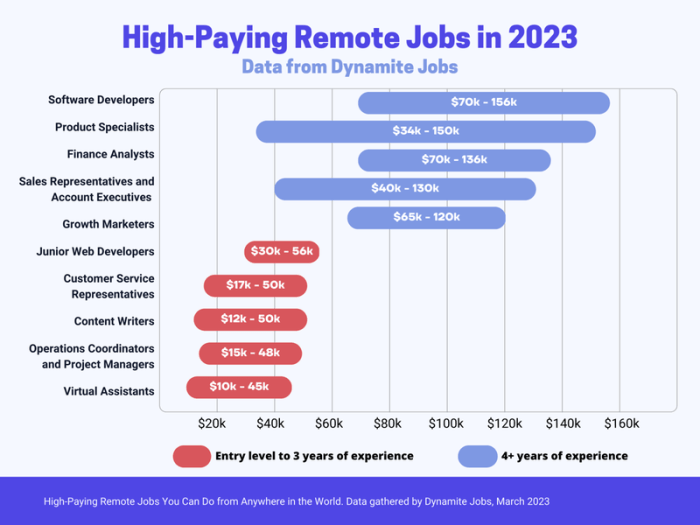
Exploring the landscape of high-paying remote jobs in 2025 unveils a world where technology, globalization, and evolving work policies intersect to redefine the way we work. This in-depth analysis sheds light on the trends shaping the future of remote work and the skills needed to thrive in this dynamic environment.
As we delve deeper into the factors, skills, industries, and geographical impact of high-paying remote jobs, a clearer picture emerges of the opportunities and challenges that lie ahead in the ever-evolving job market.
Factors shaping high-paying remote jobs in 2025
Remote work is increasingly becoming a popular choice for both employees and employers, driven by various factors that are shaping the landscape of high-paying remote jobs in 2025. Let's explore some key aspects influencing this trend.
Emerging technologies influencing remote job trends
The proliferation of advanced technologies such as artificial intelligence, machine learning, and virtual reality is revolutionizing the way work is done remotely. These technologies enable seamless collaboration, communication, and project management, making remote work more efficient and productive. Employers are willing to pay a premium for professionals who are adept at using these tools to deliver high-quality work from anywhere in the world.
Impact of globalization on remote job opportunities
Globalization has opened up a vast pool of talent from around the world, allowing companies to hire the best candidates for remote positions regardless of their geographical location. This has increased competition among remote workers, driving up the salaries for skilled professionals with specialized expertise.
As companies continue to expand their global footprint, the demand for remote workers with diverse skill sets is expected to rise significantly in 2025.
Evolution of remote work policies in various industries
With the onset of the COVID-19 pandemic, many companies were forced to adopt remote work policies to ensure business continuity. This experience has led to a shift in mindset among employers, who now realize the benefits of remote work in terms of cost savings, productivity, and employee satisfaction.
As a result, more industries are likely to embrace remote work as a permanent or hybrid model, offering high-paying opportunities to remote workers who can deliver results independently and effectively.
In-demand skills for high-paying remote jobs in 2025
The landscape of remote work is constantly evolving, and the skills required to succeed in high-paying remote jobs in 2025 are no exception. Employers are seeking candidates with a unique blend of technical expertise and soft skills to thrive in this dynamic environment.
Technical Skills
In 2025, the following technical skills are expected to be highly sought after in remote job candidates:
- Proficiency in coding languages such as Python, Java, or Ruby
- Experience with data analysis and visualization tools like Tableau or Power BI
- Knowledge of cloud computing platforms such as AWS or Azure
- Cybersecurity expertise to protect sensitive information
- Ability to navigate and troubleshoot virtual collaboration tools
Soft Skills
Soft skills play a crucial role in the success of remote workers. In 2025, the following soft skills are essential for thriving in high-paying remote jobs:
- Effective communication to ensure clear and concise interactions with team members
- Time management and self-discipline to meet deadlines and stay productive without constant supervision
- Adaptability to quickly adjust to changing work environments and technologies
- Problem-solving abilities to tackle challenges independently and seek innovative solutions
- Collaboration skills to work seamlessly with team members from diverse backgrounds and locations
Adaptability vs. Specialization
While specialization in a specific field can lead to expertise and high-paying opportunities, adaptability is becoming increasingly important in remote roles. In 2025, the ability to quickly learn new skills, pivot to different projects, and thrive in a fast-paced environment is highly valued.
Employers are looking for candidates who can balance specialization with adaptability to drive innovation and success in remote work settings.
Industries offering high-paying remote jobs in 2025
In the rapidly evolving landscape of remote work, several industries are poised to offer high-paying remote jobs in 2025. Let's delve into the sectors that are likely to embrace remote work setups and explore the potential growth of remote jobs in various fields.
Healthcare
The healthcare industry is experiencing a significant shift towards remote work, with telemedicine and virtual healthcare services becoming increasingly popular. Remote jobs in healthcare can include roles such as telehealth nurses, medical coders, and healthcare data analysts. This trend is expected to continue in 2025, offering lucrative opportunities for professionals in the healthcare sector.
Finance
Finance is another industry that is adapting to remote work models, with many financial institutions embracing virtual collaboration tools and remote work setups
The demand for remote finance professionals is expected to grow in 2025 as companies realize the benefits of a remote workforce.
Technology
The technology sector has long been at the forefront of remote work, with many tech companies offering flexible work arrangements and remote job opportunities. Remote jobs in technology can include software developers, cybersecurity analysts, and IT consultants. As technology continues to advance, the demand for skilled tech professionals who can work remotely is likely to increase in 2025.
Law
Even traditional fields like law are adapting to remote work, with many law firms and legal professionals embracing virtual meetings and remote collaboration tools. Remote jobs in the legal industry can include roles such as virtual paralegals, legal researchers, and remote legal consultants.
The shift towards remote work in the legal sector is expected to create high-paying remote job opportunities in 2025.
Education
The field of education is also seeing a transformation towards remote work, with many schools and educational institutions offering online learning opportunities and virtual classrooms. Remote jobs in education can include online instructors, educational content developers, and virtual tutors. As the demand for online education continues to grow, high-paying remote job opportunities in the education sector are expected to expand in 2025.
Geographical impact on high-paying remote jobs in 2025
The rise of remote work in 2025 has had a significant impact on job opportunities globally. With the ability to work from anywhere, companies are now able to hire talent from different geographical locations, leading to a redistribution of job opportunities across the world.
Digital Nomadism and its Influence
Digital nomadism refers to individuals who work remotely while traveling and changing their location frequently. This trend has gained popularity in recent years, especially among professionals in the tech and creative industries. Digital nomads are not tied to a specific location, allowing them to take advantage of high-paying remote job opportunities from different parts of the world.
This has resulted in a more diverse and global talent pool for companies seeking specialized skills.
- Increased competition: With the rise of digital nomadism, there is now increased competition for high-paying remote jobs as professionals from different countries are vying for the same positions.
- Flexibility and freedom: Digital nomads enjoy the flexibility of choosing where they work from, which can lead to increased productivity and job satisfaction.
- Cultural exchange: Working as a digital nomad allows individuals to experience different cultures and lifestyles, contributing to personal growth and development.
Challenges and Benefits of Remote Work for Different Regions
Remote work presents both challenges and benefits for different regions around the world. While it offers opportunities for individuals in remote or underserved areas to access high-paying jobs, it also poses challenges such as connectivity issues and time zone differences.
- Benefits for rural areas: Remote work provides individuals in rural areas with access to job opportunities that were previously unavailable, reducing the need to relocate to urban centers for work.
- Challenges in developing countries: Developing countries may face challenges such as unreliable internet connectivity and lack of infrastructure to support remote work, limiting their ability to fully participate in the global job market.
- Time zone differences: Working across different time zones can be challenging for remote teams, requiring effective communication strategies to ensure collaboration and productivity.
Conclusion
In conclusion, the future of high-paying remote jobs in 2025 is a landscape filled with promise and innovation. As industries adapt, skills evolve, and boundaries blur, remote work is set to revolutionize the way we perceive work and life balance.
Embrace the change, hone your skills, and prepare for a future where work knows no boundaries.
Answers to Common Questions
What emerging technologies will influence high-paying remote jobs in 2025?
Emerging technologies such as AI, blockchain, and AR/VR are expected to shape remote job trends by increasing efficiency and connectivity.
How important are soft skills for success in high-paying remote jobs?
Soft skills like communication, adaptability, and time management are crucial for remote work success as they facilitate collaboration and productivity.
Which industries are likely to offer high-paying remote jobs in 2025?
Sectors such as technology, finance, and healthcare are expected to embrace remote work setups, while traditional fields like law and education are also adapting to remote work.
What challenges and benefits do different regions face in relation to high-paying remote jobs?
Different regions experience challenges like connectivity issues and time zone differences, but they also benefit from access to a global talent pool and increased flexibility.